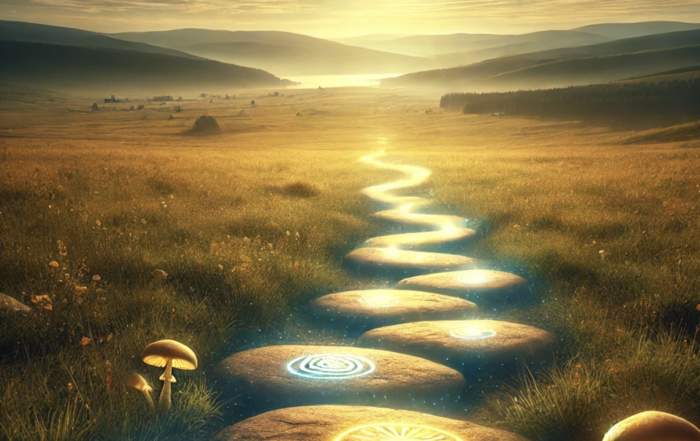
Following the Line: A Creative Way to Explore Psychedelic Integration
Following the Line: A Creative Way to Explore Psychedelic Integration What happens when we bring music, movement, and a little curiosity into the integration process? Some experiences are hard to put into words. A psychedelic journey might leave us with vivid images, unexpected emotions, memories, questions, or a feeling that something important happened, even if [...]
Following the Line: A Creative Way to Explore Psychedelic Integration
What happens when we bring music, movement, and a little curiosity into the integration process?
Some experiences are hard to put into words.
A psychedelic journey might leave us with vivid images, unexpected emotions, memories, questions, or a feeling that something important happened, even if we can’t quite explain what it was.
And sometimes, trying to explain everything right away isn’t particularly helpful.
One of the things I appreciate about psychedelic integration is that it doesn’t always have to look like talking, journaling, or searching for answers.
Sometimes we can explore through creativity.
I recently came across a drawing practice called Neurographic Art, and I love the possibilities it offers for creative exploration, especially when paired with music from a psychedelic journey.
It’s simple, accessible, and doesn’t require any artistic ability.
Just paper, a pen, some color, and a willingness to get curious.
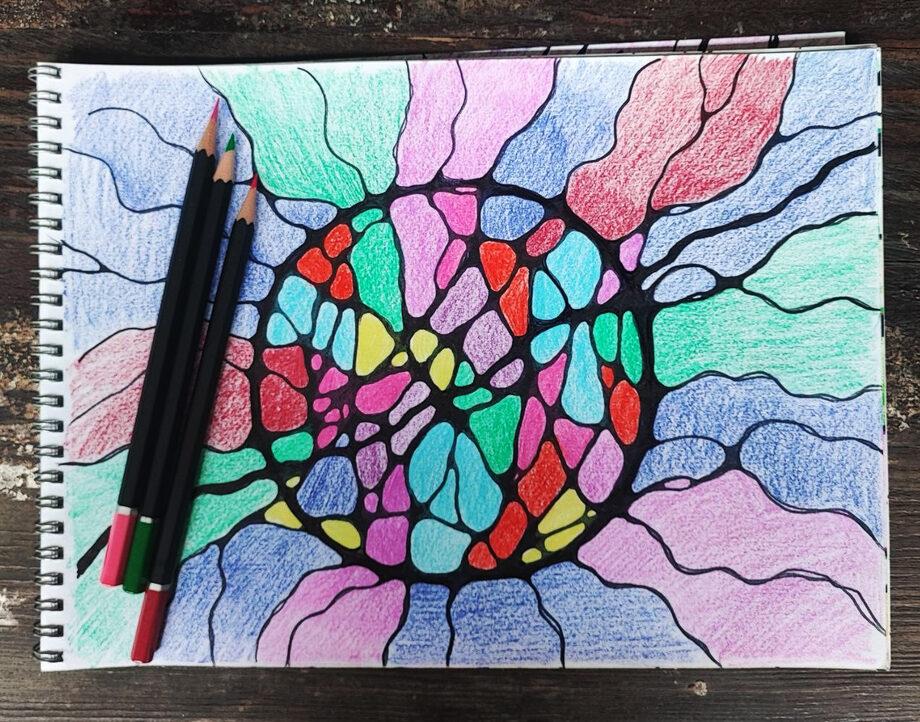
[Featured image: Colorful neurographic artwork with flowing black lines and rounded intersections.]
What Is Neurographic Art?
Neurographic art uses flowing, intersecting lines to create an abstract drawing. Where the lines cross, you round out the sharp corners, creating smoother connections. You can then add color, patterns, and shading.
The process can feel playful, meditative, and surprisingly absorbing.
There are theories about neurographic drawing and its effects on the brain, but specific claims about rewiring neural pathways haven’t been established by strong scientific evidence.
What interests me is something simpler: what happens when we give ourselves permission to create without knowing what we’re creating?
To follow a line without needing to know where it leads.
That feels especially relevant to psychedelic integration.
Bringing a Little of the Journey Into the Room
Music is often an important part of a psychedelic experience.
A particular song might remind us of a moment, a feeling, an image, or something we encountered during the journey.
One way to explore integration creatively is to revisit a small portion of your journey playlist while drawing.
Not to recreate the experience or force anything to happen, but simply to see what you notice.
Maybe a memory returns.
Maybe a feeling comes forward.
Maybe you hear the music completely differently this time.
Or maybe you just enjoy drawing.
All of those possibilities are welcome.
An Invitation to Try It
You can explore this on your own or with someone supporting your integration process.
Give yourself about 30–40 minutes, somewhere you feel comfortable.
Gather a few things:
- A blank piece of paper
- A black pen or marker
- Colored pencils, crayons, or markers
- Music from your psychedelic journey, if available
- A little uninterrupted time
1. Begin With the Music
Choose a portion of your journey playlist that you’re curious about revisiting and that feels comfortable enough to hear again.
Settle into your space. Take a few breaths. Listen.
You might close your eyes or simply soften your gaze.
Notice what comes up without trying to make anything happen.
Is there a feeling? A memory? A sensation? An image?
Or perhaps there’s nothing in particular.
That’s okay, too.
2. Let Your Hand Wander
With the music playing, put your pen on the paper and begin drawing.
Make long, wandering lines.
Let them curve, cross, loop, twist, and move around the page.
You might follow the rhythm of the music, or you might just follow whatever movement feels natural.
Try not to plan the drawing.
You aren’t trying to create a picture of anything.
You’re simply making marks and seeing where they go.

Close-up of neurographic lines showing rounded intersections.
3. Soften the Intersections
Once you’ve created a collection of lines, look at the places where they intersect.
Using your pen, begin rounding the sharp corners where the lines meet.
Turn the angles into smooth curves.
You might notice that this part of the exercise feels calming or repetitive. You might notice impatience, curiosity, or something else entirely.
There’s nothing you’re supposed to feel.
Just notice.
4. Bring in Some Color
Now comes another opportunity to play.
Choose colors that appeal to you.
Fill in some shapes. Leave others blank. Add patterns, shading, or more lines.
You don’t have to think about what the colors mean.
Maybe you feel drawn to one area of the page. Maybe certain colors remind you of your experience.
Maybe you just really love purple.
Whatever happens is fine.
You also don’t have to finish the drawing.
5. Get Curious About What You Created
When you’re ready, pause the music and take a look at your drawing.
Rather than trying to interpret it, see what you notice.
Here are a few questions you might explore:
- What was it like to hear that music again?
- Did anything from your journey come back to you?
- What was it like to create without a plan?
- Is there an area of your drawing that catches your attention?
- Does anything feel connected to something you’re exploring in your life right now?
- Is there something you’d like to remember or carry forward?
You might write a few thoughts on the back of your drawing or give it a title.
Or you might not.
There’s no requirement to find a message hidden in the artwork.
What If Nothing Profound Happens?
I think this is worth talking about.
Not every integration practice needs to result in a breakthrough.
You don’t have to uncover a hidden truth, experience a big emotional release, or walk away with an entirely new understanding of yourself.
Maybe you spend half an hour enjoying music and making something colorful.
Maybe you discover that it’s hard for you to do something without trying to do it perfectly.
Maybe you notice how relaxing it feels to stop thinking about the outcome.
Or maybe the process brings up something that you want to explore a little more.
All of that can be valuable.
I think there’s something lovely about making space for an experience without demanding that it become something.
Integration Is Something We Can Keep Exploring
One of the things that continues to interest me about psychedelic integration is how differently it can unfold for each person.
Sometimes we process through conversation. Sometimes through movement, music, time in nature, creativity, or simply going about our lives with a little more awareness.
There isn’t one correct way to make meaning from an experience.
And we don’t have to understand everything all at once.
If you’re curious, give this exercise a try.
Maybe use a song from your journey playlist. Maybe choose music that feels meaningful to you right now, even if you’ve never had a psychedelic experience.
See what happens when you stop trying to draw something and simply start drawing.
What might you discover when you allow yourself to follow the line, without needing to know where it’s going?
With curiosity,
Lisa
I’m Lisa Snyder, a licensed psilocybin facilitator in Portland, Oregon. I enjoy exploring the many ways we make meaning from our experiences, including through creativity, connection, conversation, and curiosity. I share these reflections in the spirit of exploration, not as instructions for what anyone’s experience should mean.
Post Author:
Lisa Snyder
Categories:
Date Posted:
October 30, 2026
Share This: